
Travelling with us
For patients: what happens on your journey, who you will meet, and what you can ask for.
This page is for patients – the person we are taking to hospital, an appointment or home. If you are a family member or carer, see For families and carers.
We are Secure Care UK. Hospitals, the NHS and local councils ask us to help people travel safely when they are unwell – to a hospital, between hospitals, to an appointment, or home again. We are not the police, and travelling with us is not a punishment.
Who will come to meet you
Our staff wear grey polo shirts with our logo, and black trousers, so you can usually tell who they are, and they should also carry an ID card. How many crew come depends on the length of the journey, how much support you may need, and sometimes the size of the crew that happens to be nearby. They will tell you their names, where you are going and roughly how long it will take. If anything is not clear, ask again. They are used to it, and they won’t mind.
The vehicle
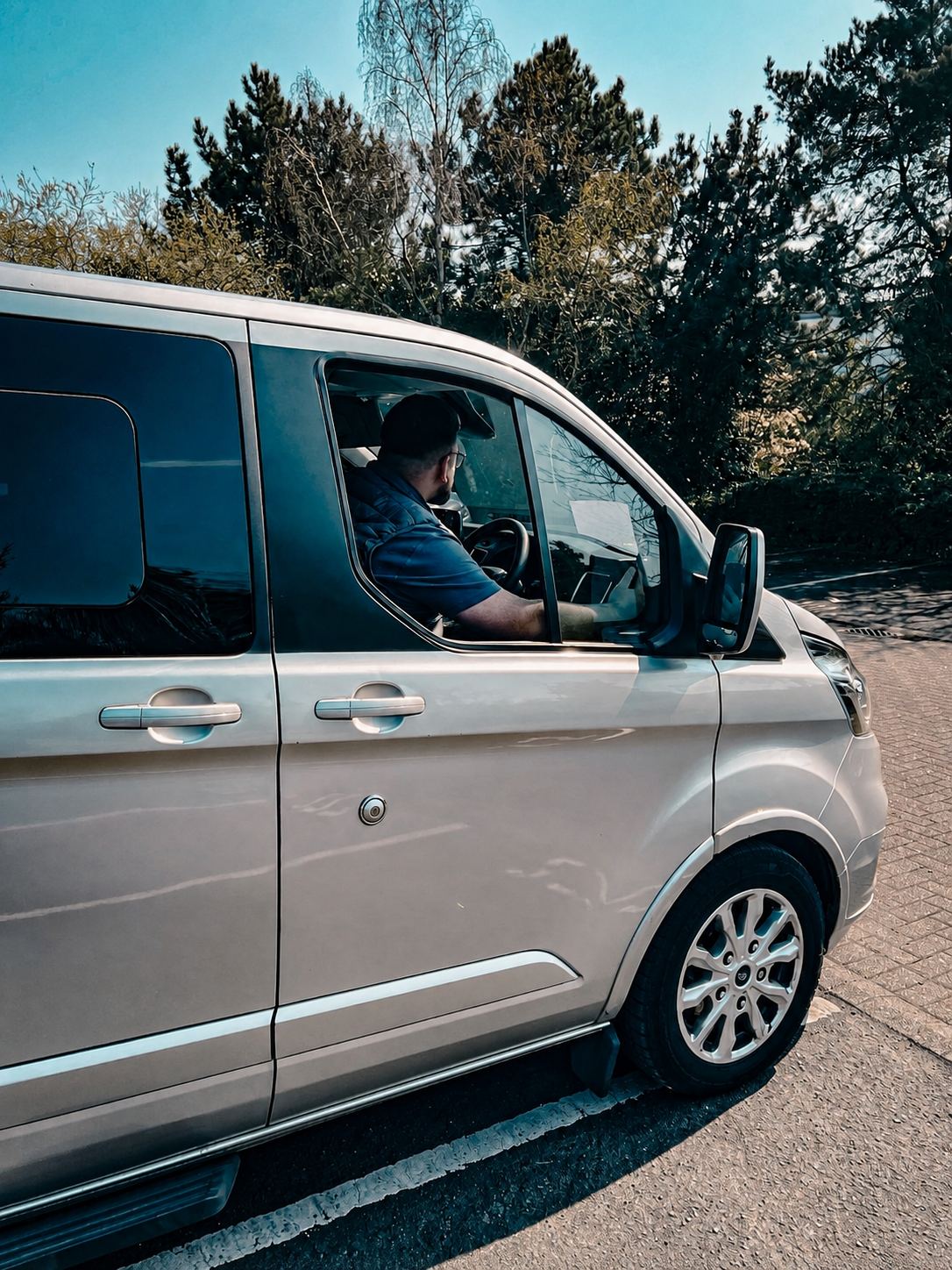
Our vehicles are fitted out for patient journeys, with proper seats and seatbelts for you and the crew. We use a few different types: minibuses, larger vans with a separate secure area at the back, and ambulances that can carry a stretcher or a wheelchair.
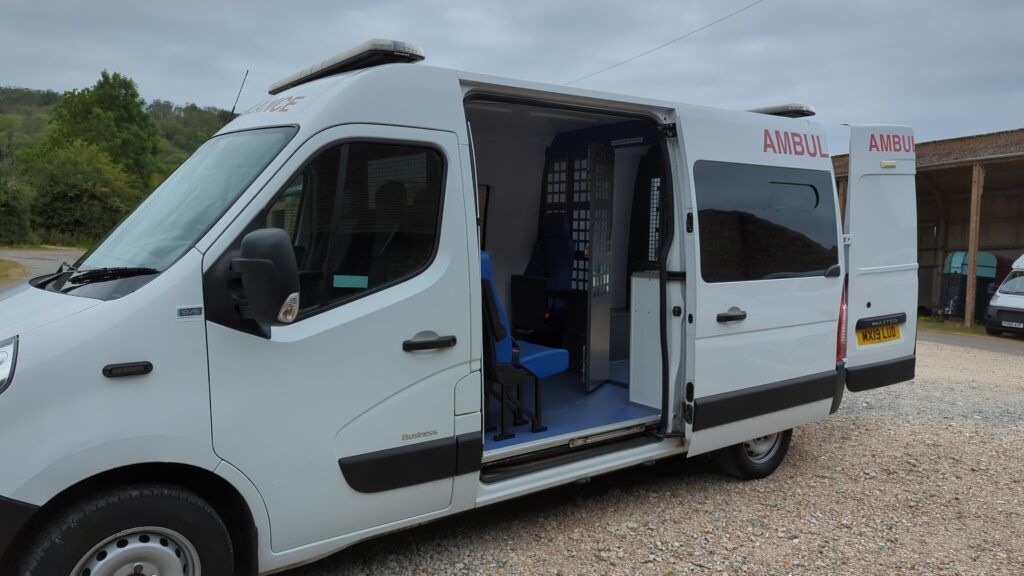
The secure area is used rarely, and only as a last resort when it is needed to keep everyone safe. If it is used, our crew will tell you what is happening and why.
On the way
Someone from our crew stays with you for the whole journey. You can ask how much further there is to go, or ask for a drink – water is usually available. If you need the toilet, tell us. Whether we can stop on the way depends on keeping everyone safe, and our crew will explain.
If you’d like to listen to music or the radio, or you’d like the heating turned up or down, please let the crew know.
Smoking and vaping are not allowed in our vehicles. For safety, bags are kept separately in the vehicle during the journey. You can usually use your phone, unless it would put you or others at risk.
If you feel unwell during the journey, tell our crew straight away.
Your journey is arranged once a hospital bed has been found. If you are in a place of safety under section 136, finding a bed can sometimes take a while. Occasionally there may be a short wait when we arrive, while the ward gets your room ready or deals with something urgent. Our crew will explain what is happening.
If you have medication with you, our crew will keep it safe and hand it to the staff at the other end.
If you need extra support
If you need an interpreter or British Sign Language, or you are autistic or have a learning disability and something would help – such as a quieter journey, more time, or your hospital passport – it helps if the people arranging your journey tell us beforehand. You can also tell our crew on the day, and we will do what we can.
Keeping everyone safe
Our crews are trained to keep things calm, which mostly means talking, listening and giving you time. Around 9 in 10 journeys happen without any physical intervention.
If someone is at risk of hurting themselves or another person, our staff may need to hold them. This is only ever a last resort. When it happens, it is usually because the person is very unwell, and we use the least intervention needed, for as short a time as possible, and only methods we are trained and certified in.
Soft or hinged handcuffs, or the secure area of the vehicle, are used rarely, and only as a last resort.
Every use of restraint is recorded, and reviewed by our managers and our Restraint Panel.
To keep everyone safe, our crew may ask to check you or your bags for anything that could cause harm, ideally with your agreement. Sometimes we ask the ward to do this before we leave.
Sometimes the police are there too, for example if they brought you to a place of safety.
When you arrive
We normally go in with you, introduce you to the staff who will be looking after you, and pass on anything important, so you do not have to explain everything again. If there’s anything you’d like us to ask the nursing staff on your behalf, we’d be happy to do so if you don’t feel able. See Arriving at hospital.
Other things people ask
Am I under arrest?
No. We are a patient transport service, not the police. Our job is to look after you on the journey.
Do I have to go?
It depends. If you are detained under the Mental Health Act, you will need to travel to where your care team has arranged, and the law says you must stay with us for the journey. If you are not detained or being recalled to hospital – for example, you are going to an appointment or home from hospital – please speak with your care team or the ward first, to discuss your options.
Sometimes a person cannot make this decision for themselves. They may then be moved under a different law, the Mental Capacity Act, if it is in their best interests, and the team responsible for their care should explain why.
Will people see me getting in?
We will keep things as calm and private as we can. Most of our vehicles are unmarked.
Can someone come with me?
Sometimes, if it has been agreed in advance with the people arranging your journey. It depends on the situation.
Is the journey recorded?
We keep a written record of every journey. Some of our vehicles have CCTV, and we are trialling body-worn cameras in some areas.
What if I am under 18?
We regularly support children and young people. A parent or carer may sometimes travel with them, if this is agreed as part of the plan made by the professionals involved.
Who decides where I am going?
The people responsible for your care – such as the doctors, the approved mental health professional or sometimes the police – decide where you go, not our crew. We can tell you where we are heading, and the staff at the other end can answer questions about your care.
If you need help right now
NHS 111
Call and choose the mental health option
Samaritans
116 123 – free, day or night
Shout
Text SHOUT to 85258
999
If you or someone else is in danger now
In hospital? Any member of staff can help, and you can ask about advocacy.